
The Combination of Story Imagery and Map Design in GRIS
GRIS is a side-scrolling role-playing puzzle game. The protagonist–a little girl–collects stars and finds colors in her nightmare, then returns to her real world. There is almost no text in GRIS, but the touching story is clearly told through concise and delicate animation. The map design of the puzzles effectively combines the imagery of the nightmare, allowing players to immerse in the story while solving puzzles, and the interaction brought by the animation performance enhances the game experience.
The little girl’s mother passed away. She was so sad and lost hope for the future, drowning into a nightmare. And the fact that her mother died, which she was scared to know, was concretized in her dream as a black bird and a giant snake, constantly obstructing her on the way forward. In Chapter II, the player jumps onto the tower after solving a puzzle, and the flocks of birds around her then fly together and turn into a big black bird, which blows a hurricane towards the little girl. The background music also follows with changes. These transform the originally relaxed atmosphere into tension and urgency, pushing the player to leave and go to the next level.
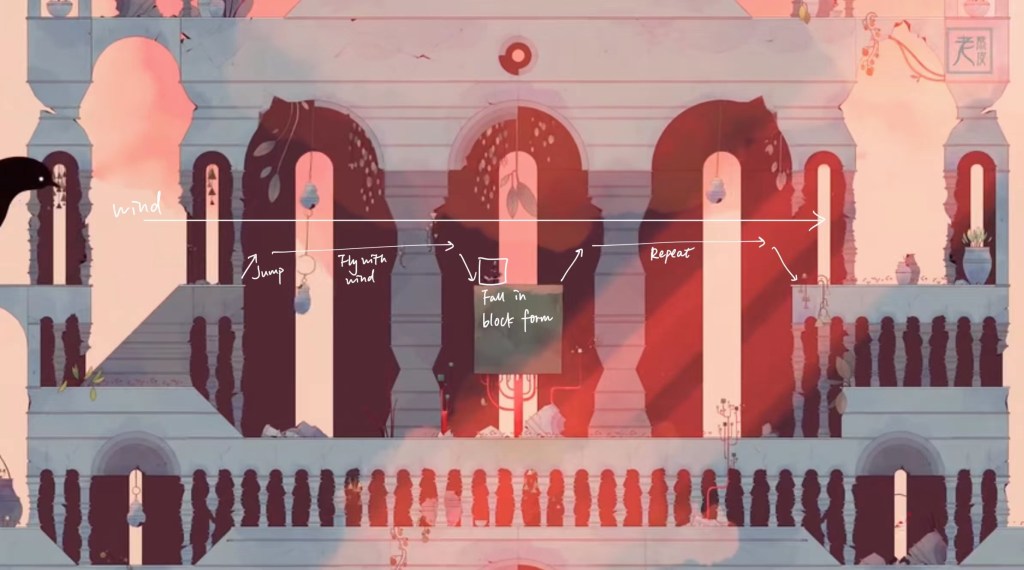
After that, the bird keeps chasing the little girl, trying to blow her away in different places. The player can only control the girl transform into a heavy block (skill learned in the previous chapter) and move forward slowly. The big bird appears with appropriate intervals, and the music is flexibly adjusted according to the timing, controlling players to switch between a rapid pace of escape and an easeful pace of relaxation. This pace change controls player’s emotions and provides a richer game experience. In one of the locations, the player needs to utilize the wind blown by the big bird to fly across a distance between architectures after jumping up, then switch to the block form and wait for the wind to stop. The big bird seems to be blocking the little girl’s way forward, but sends her further away with the wind, arousing the player’s curiosity about the relationship between the big bird and the girl, which will become a motif for the player to keep on playing and pursue completeness in the story behind.
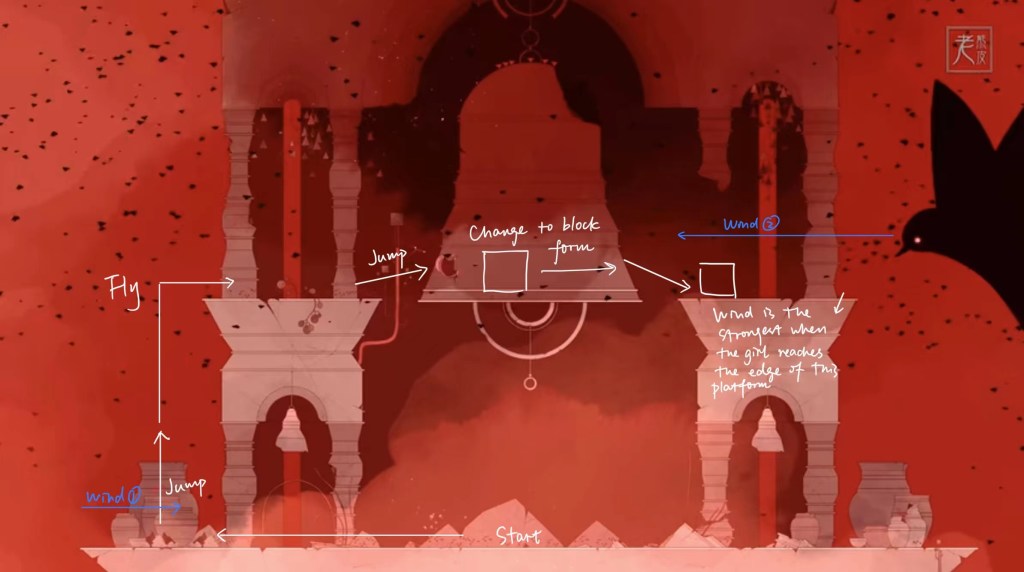
In another, the girl needs to use the wind to ring a huge bell. The player needs to control the little girl move to the edge of the architecture and jump to the edge of the bell, while the big bird waits outside the edge. As the girl approaches, it will blow stronger wind, reminding the player that the strength of wind is affected by the distance between the girl and the bird. When the girl jumps to the side of the big clock, the big bird will appear from the other side of the bell, and the player who gets the prompt needs to move to the other side of the bell by switch to the block form, so that the bird can blow the strongest wind and ring the big bell. The fear, represented by the big bird, not only initiates the design of the puzzles, but also explains to the players about the story meaning that the closer the girl gets to the reality, the painful she feels and the more she tries to keep herself away subconsciously.
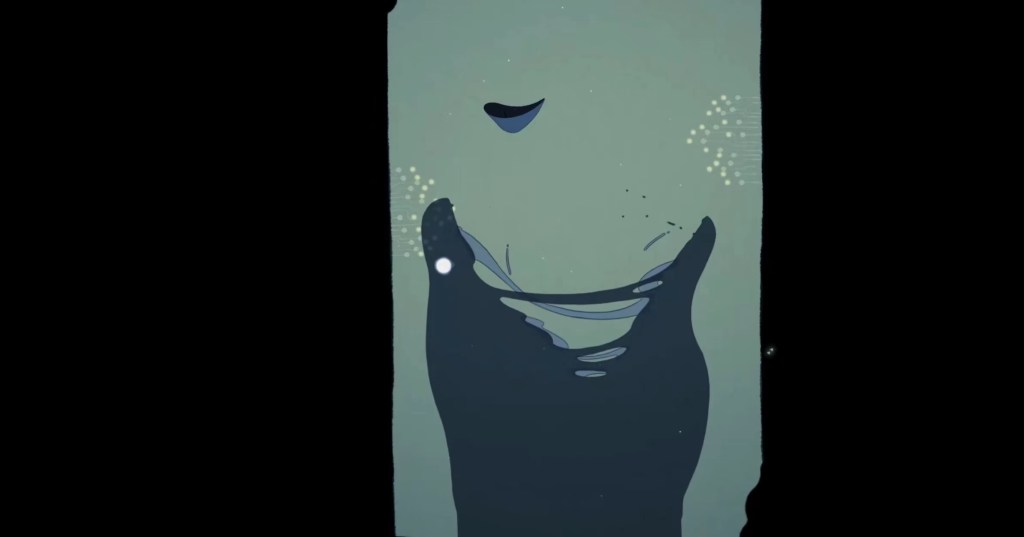
In Chapter III, the big bird appeared again, smashed the statue of the girl’s mother, and chased the girl into water, while transforming into a black snake, opening its mouth, and trying to swallow the little girl. This intense and exciting chase allows players to quickly familiarize with moving in water and constructs a smooth transition into another map. When the chase stops, the girl falls into the darkness underwater. After the player explores and relieves, the black snake appears again with a jump scare. At the end of the second chase, when the girl is about to be swallowed by the black snake, a pink turtle that had guided the little girl swims out from the mouth of the snake, and takes the girl away, which symbolizes the girl’s stronger belief after self-exploration in the nightmare.
In conclusion, the design of the bird and the snake enriches the gameplay and promotes the story development while solving puzzles. The crises they bring enable players to better immerse themselves into the game world, creating a wonderful visual and narrative performance to enhance the game experience.
 Yuning "Anona" Yang
Leave a comment