

Lead Level Designer
- Tool: Unreal 5.3
- Platform: PC, SteamDeck
- Level Size: 3 levels
- Team Size: 47
- Role: Lead Level Designer
- Development time: 12 weeks, ~180 hours in total.
Trailor
Summary
“Fastival” is a carnival themed multi-player arcade racing game free on Steam.
Responsibility
As the Lead Level Designer, I led three track teams of 13 people, managing the development and refinement of tracks and their environments. I worked closely with producers and leads from other disciplines to coordinate asset requests, organize technical support, and address bug fixes, ensuring smooth collaboration throughout the process.
When we started with nothing certain…
We had 17 level designers in total, which is a lot to manage efficiently. The first thing I did was ask about everyone’s preferences—what they wanted to work on. Track design required designers to focus on mechanics, but we also needed people to handle decorations and environments. If someone wanted to work on sound or pickups, I ensured they had opportunities to join those groups.
At first, I divided everyone into four groups during the POCT stages so they could explore their interests while brainstorming track ideas for later use. I provided research topics for the teams to choose from, which later resulted in great tutorials—like how to make a twisted loop with MRT—or short lectures on topics like Mario’s track design techniques. My producer and I organized these information in Miro for future reference. Then, I had each team brainstorm two track designs and present them to the others. They could go as wild as they wanted, and we selected the most creative yet feasible ideas for our final tracks.
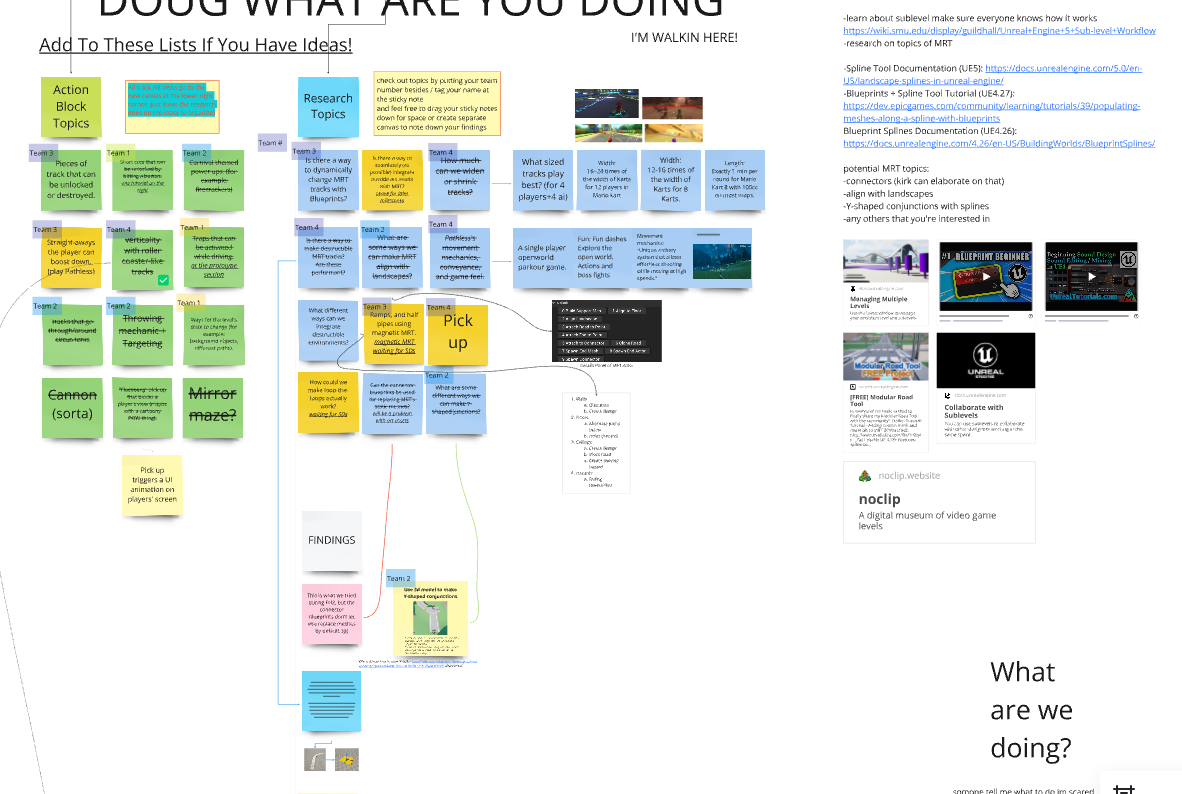
Research Topics – Turned to great tutorials and short lecture talks! and a great archive for future reference! 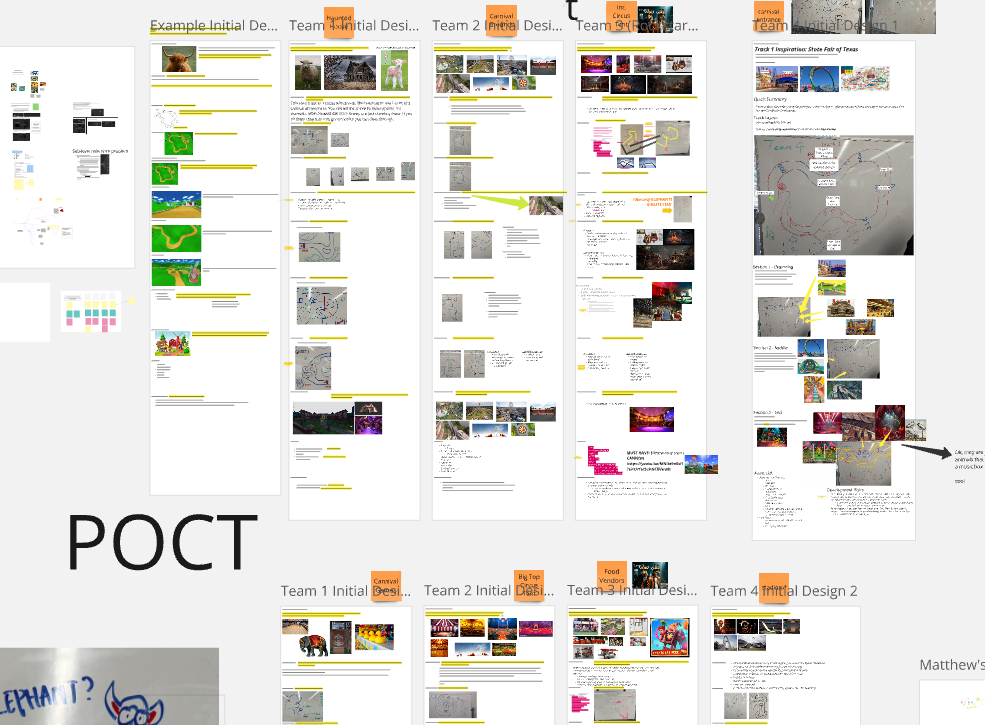
POCT Track Designs – Theme, Reference Pictures, Gameplay Minute, Risks and Potential Assets 
Track Designs Selected and Iterated for POCG – More fleshed out and went over discussions with programmers and artists on feasibility
In later stages, we decided to stay with only 3 tracks. This is where the sound people and pickup people left to their new groups, and I formed the three track groups, and make sure there were at least 1 artistic person on each team to help with environmental decorations.
Concept Art & Level Theme
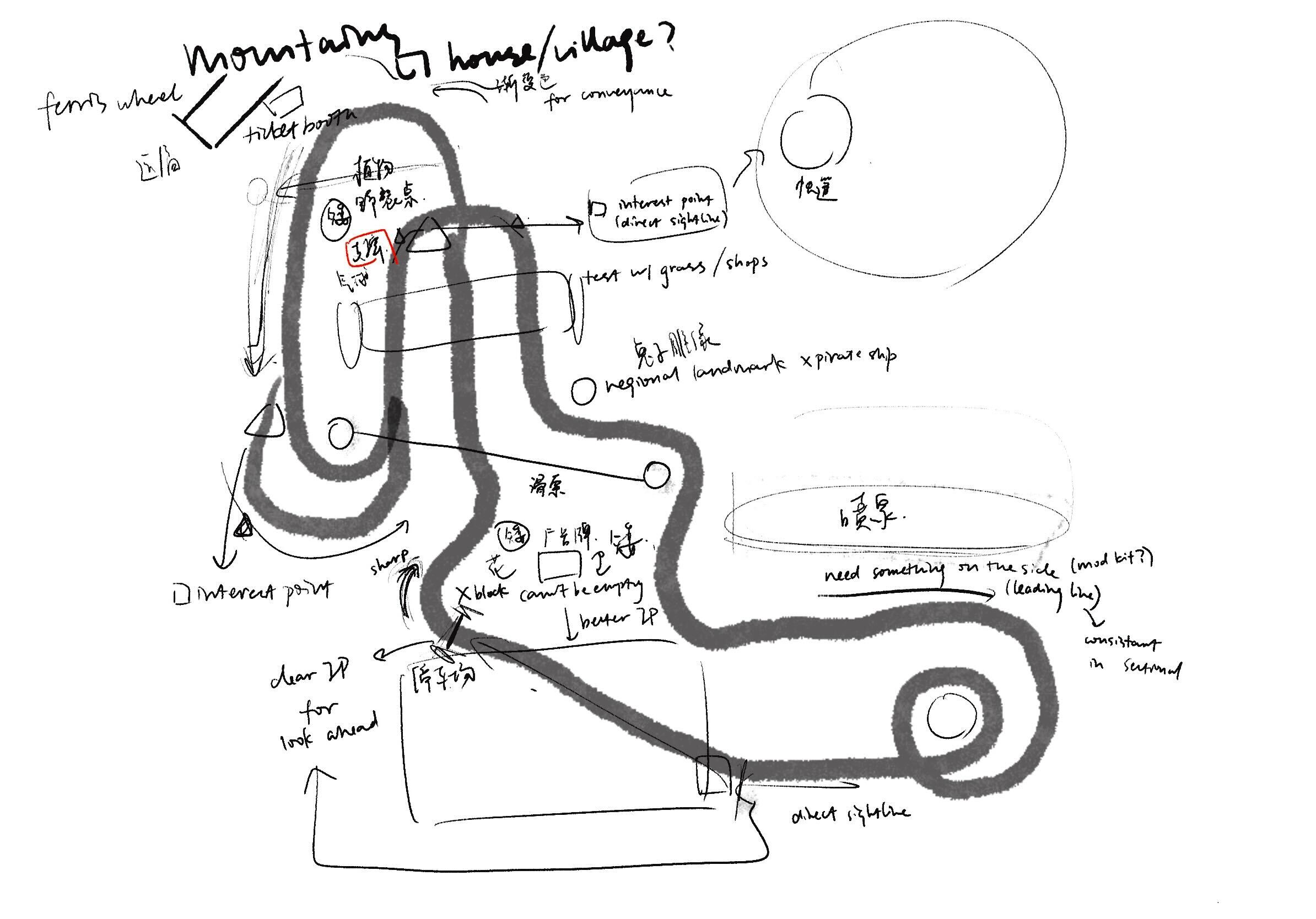
My Rough Sketch for Track 1 Environment Design 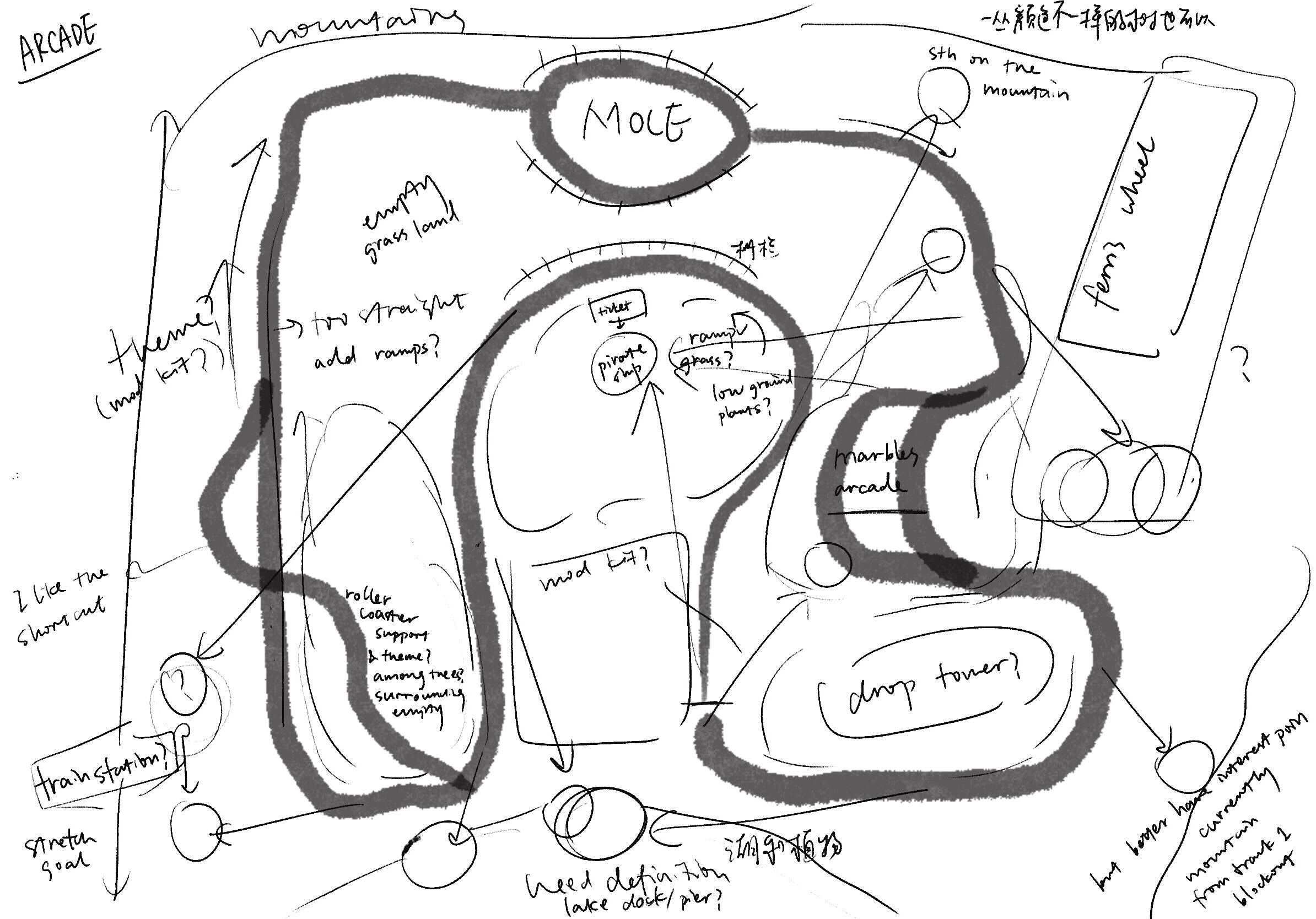
My Rough Sketch for Track 2 Environment Design 
My Rough Sketch for Track 3 Environment Design 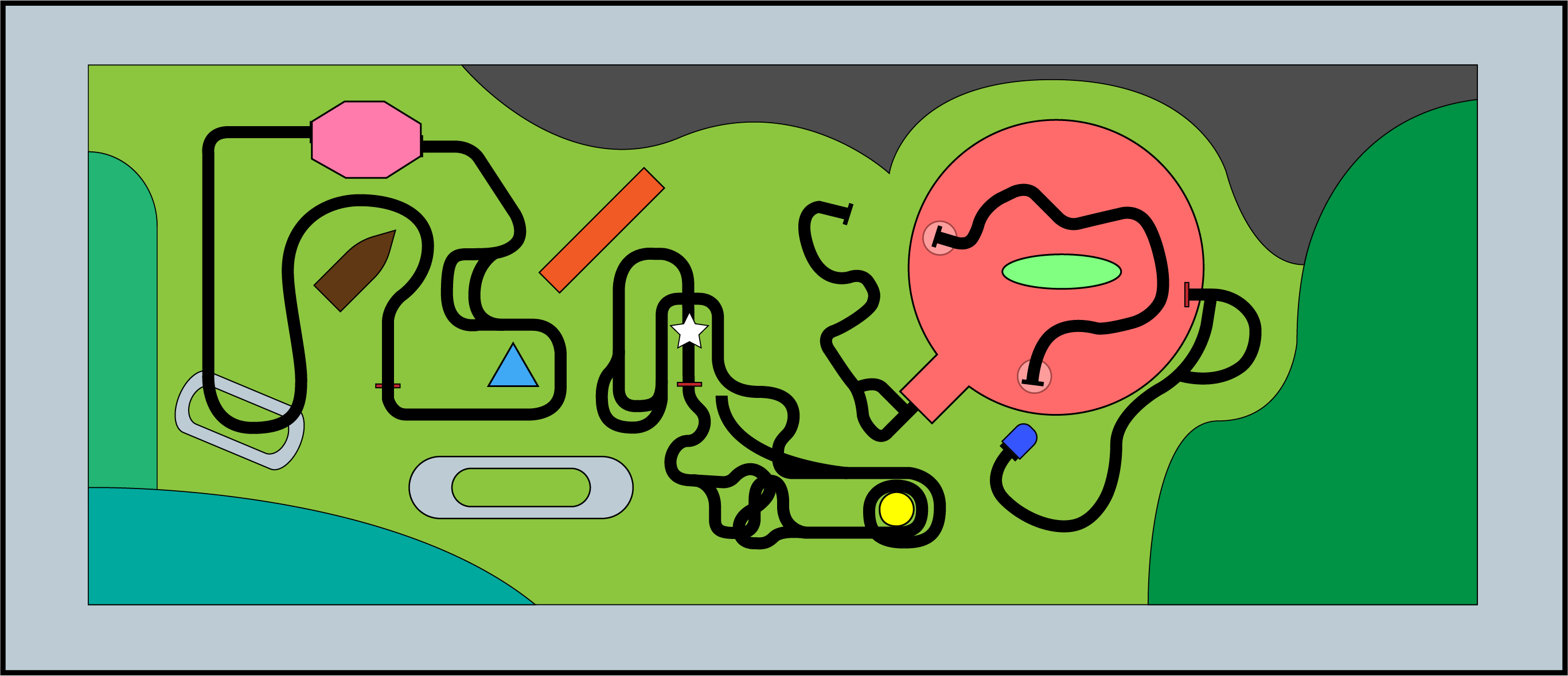
Boh’s Concept Map for The Entire Carnival Park 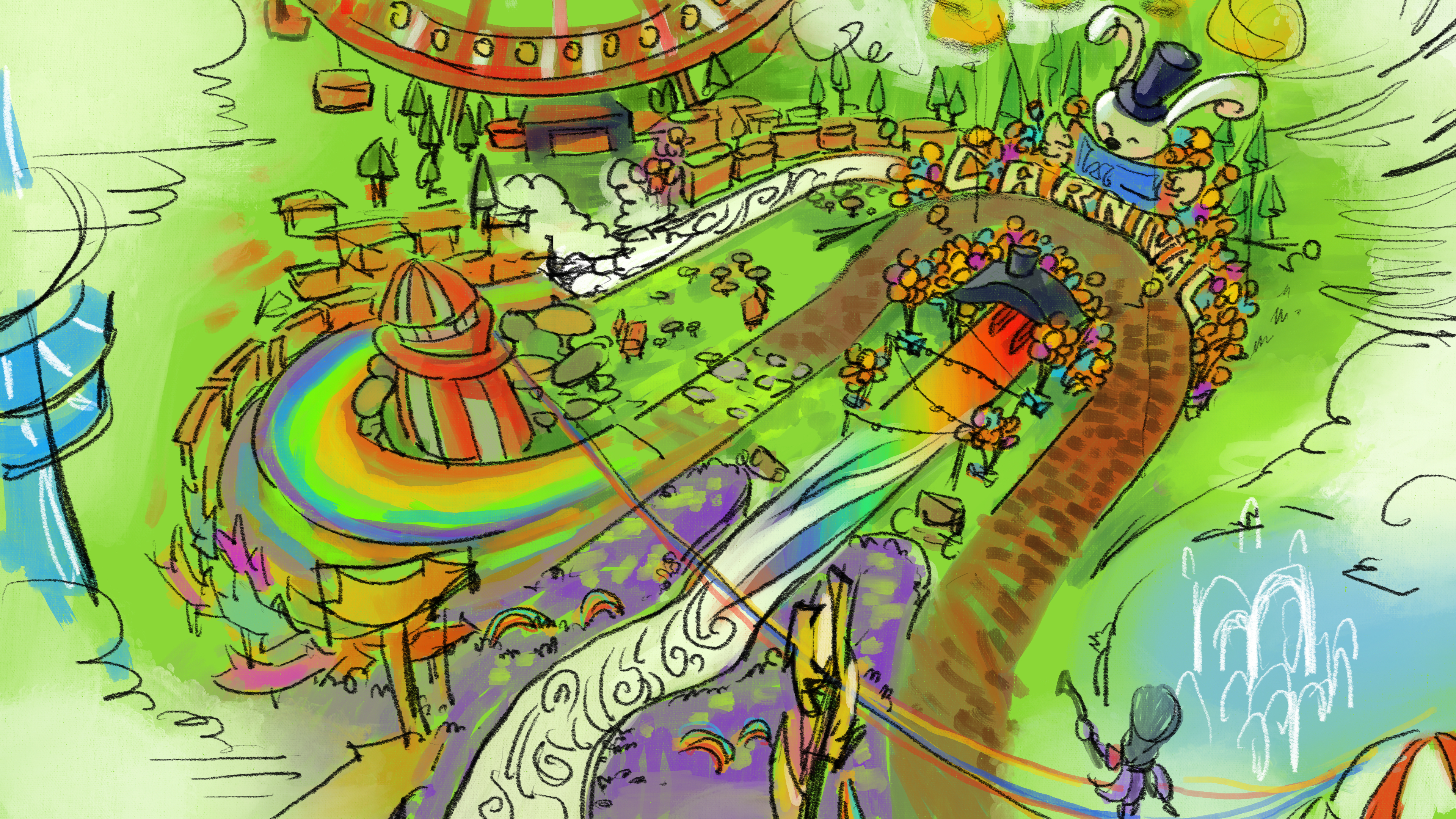
Boh’s Concept Art for Track 1 Based on My Description 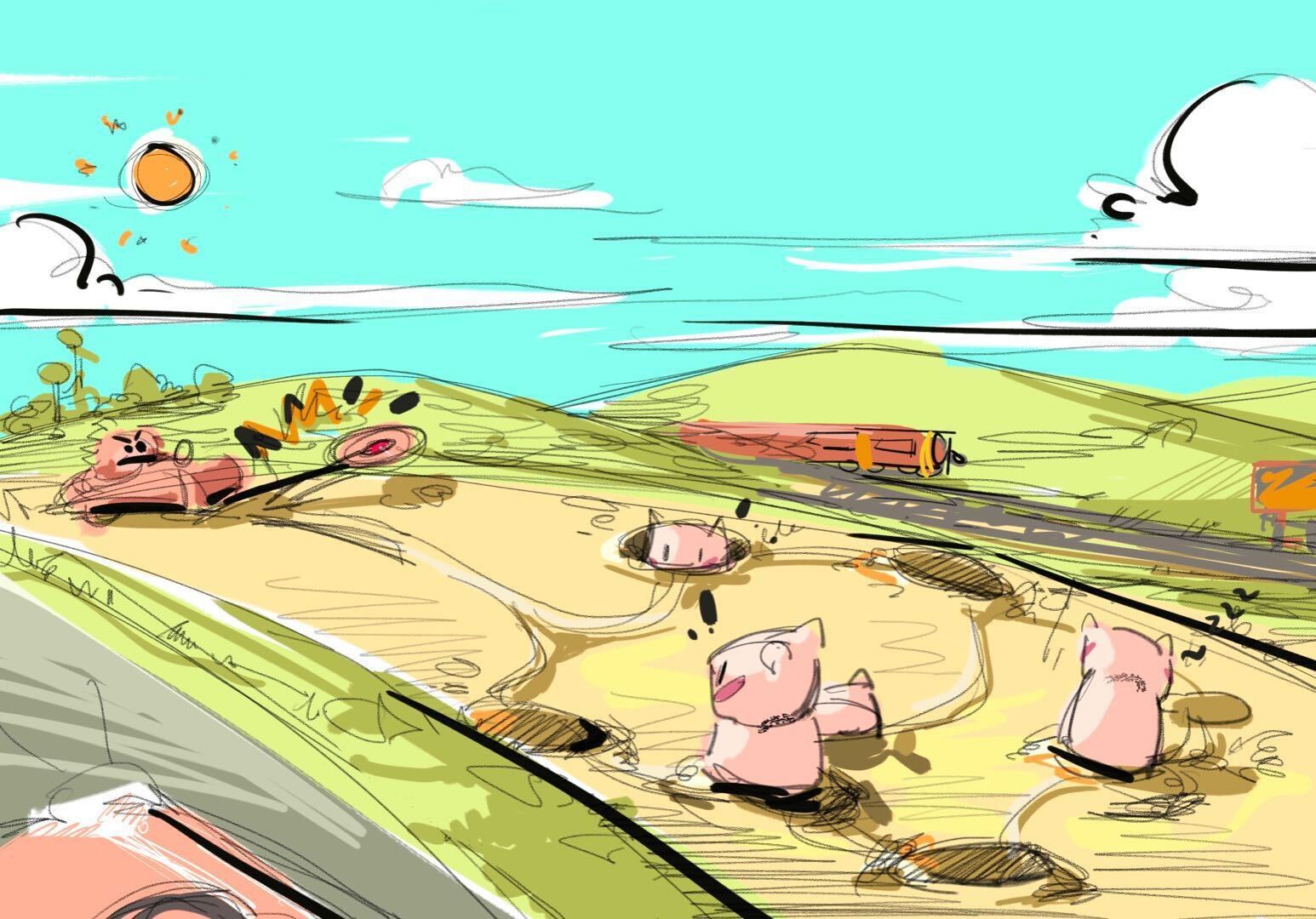
Boh’s Concept Art for Track 2 Based on My Description 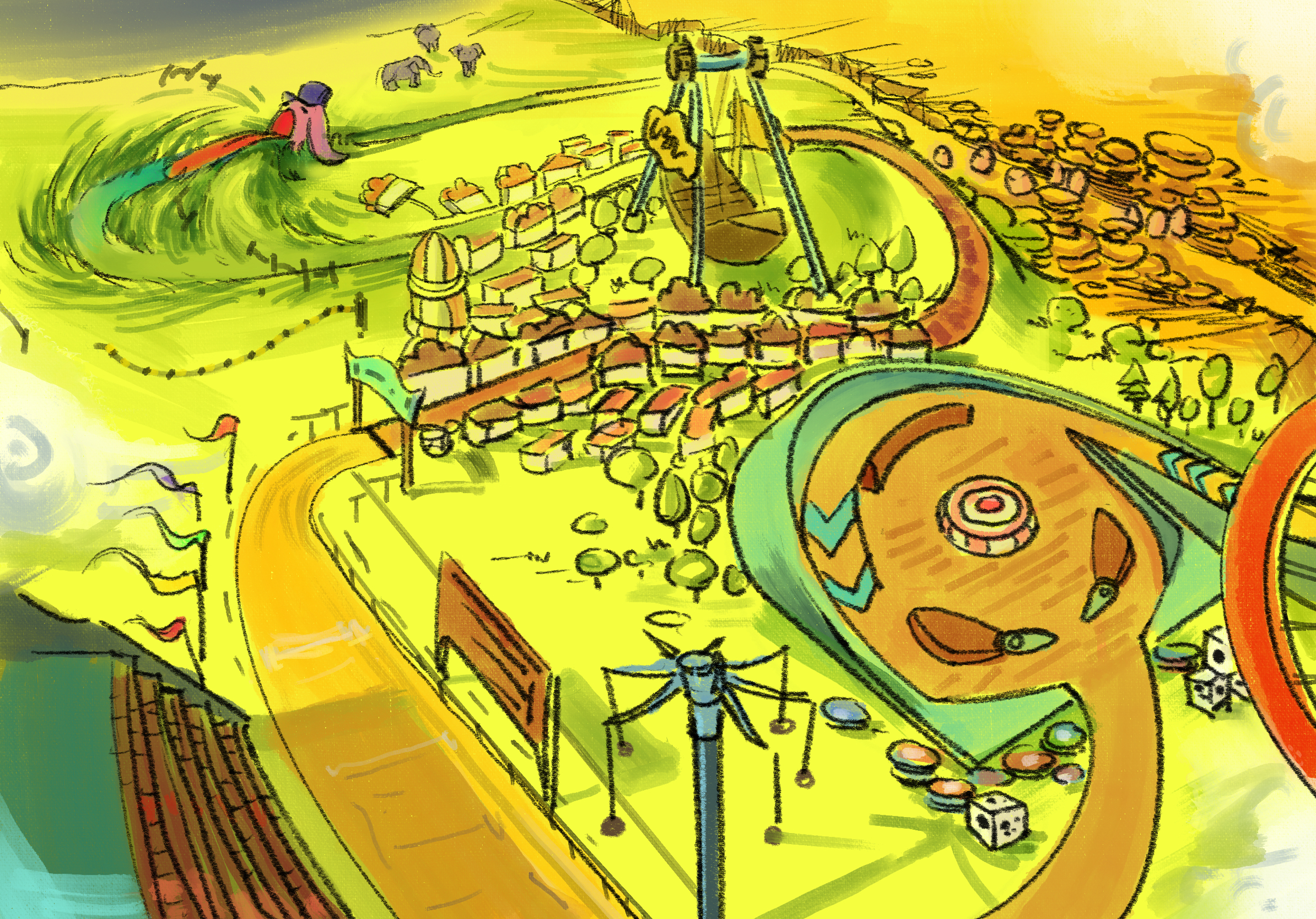
Boh’s Concept Art for Track 2 Based on My Description
- When we entered the whitebox stage and the tracks started taking shape, we considered how to place existing props to avoid empty spaces and what additional assets we should request.
- Based on the designers’ feedback and previous discussions with artists, I created a rough draft for each track with a defining theme. I outlined key placements considering sightlines, including points of interest, landmarks, conveyance props, and environmental details.
- When the team struggled to visualize my ideas, I asked Boh, a designer with artistic skills, to create concept art based on my descriptions. These sketches became valuable references for the team.
Asset Request List
With the concept art sketches, we restructured the asset request lists and created a shared Miro board with the artists to give them a clear overview of their tasks. At this point, our art lead approached me, explaining that they wouldn’t be able to complete everything.
In response, I considered how our artistic level designers could contribute and asked if they were interested in collaborating with the artists to create simple yet essential models for the tracks. We also updated the asset list with details on who was responsible for each task, file locations, and usage instructions, making the process more structured and efficient.


Customized Piece
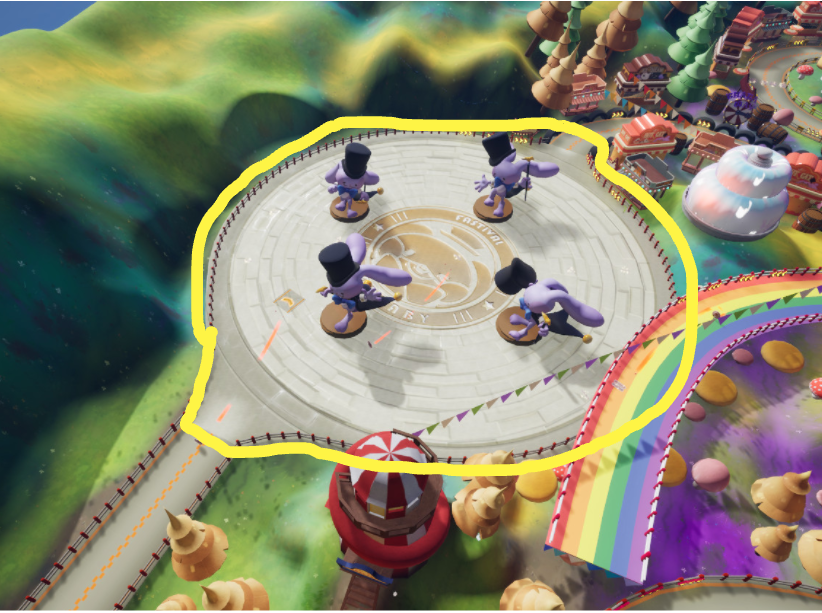
- The Level Designers envisioned an open section for Track 1 that encourages player freedom in traversing the space, rather than simply following the path.
- The area’s unique shape, with openings linking to the entrance and exit tracks, presented a challenge as no existing assets were available. Our artists were initially hesitant to model it due to uncertainty.

- To address the challenge, I created a basic proxy using Unreal’s shapes, matching the approximate length of the entrance and exit, and shared it with the artist.
- Once the artist modeled the asset, we iterated on its size, scale, and textures, incorporating feedback to finalize the asset’s look in the game.
We actually had quite a debate about what this open space should look like among designers and artists.
- The designer of this section wanted it to be a space filled with food carts, but I thought the food carts were already used everywhere and wouldn’t make this place look unique or interesting enough.
- Boh, when drawing the concept art, proposed the idea that this place could be a parking lot. While this would add more modeling work for the artists, it would also look boring.
- The artists wanted to showcase the rabbit statues and turn this place into a plaza.
As the level design lead, I needed to consider the bigger picture of the game, combining feasibility and visuals. The rabbit statue was actually the best idea, so I made the choice and talked to the designers, hoping they could understand the reason behind it.
Conveyance Antline
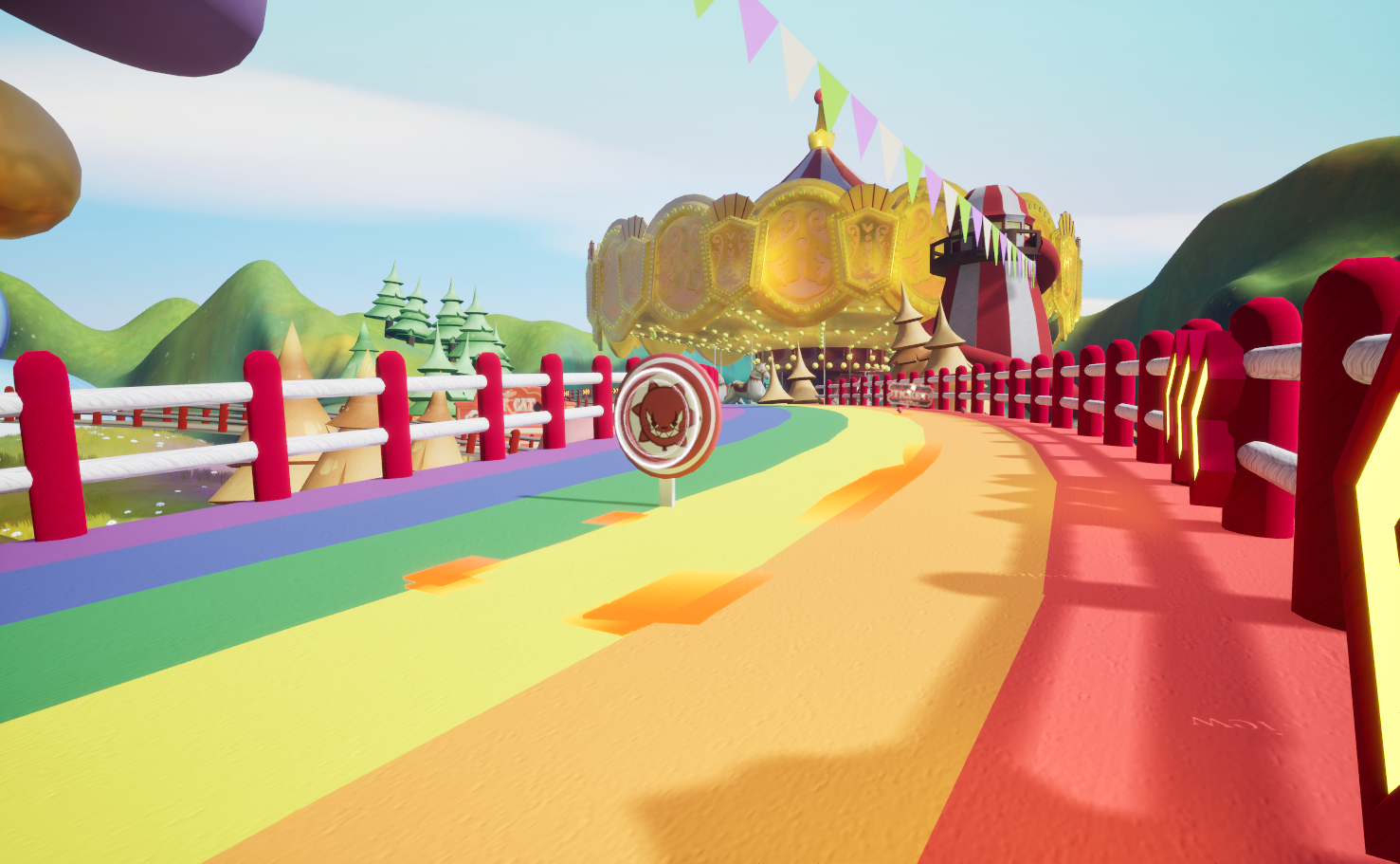
- During one milestone, stakeholders suggested that the target mechanics needed clearer conveyance linking them to their activations.
- Our Game Designer Matthew, brought up that we should add some connecting lines.
- I drafted a design where bulb lights lit up sequentially from the target to the object, similar to Portal’s mechanics.
- The ant line follows a straight path and turns 90 degrees to the track center line and back, providing a consistent visual language.
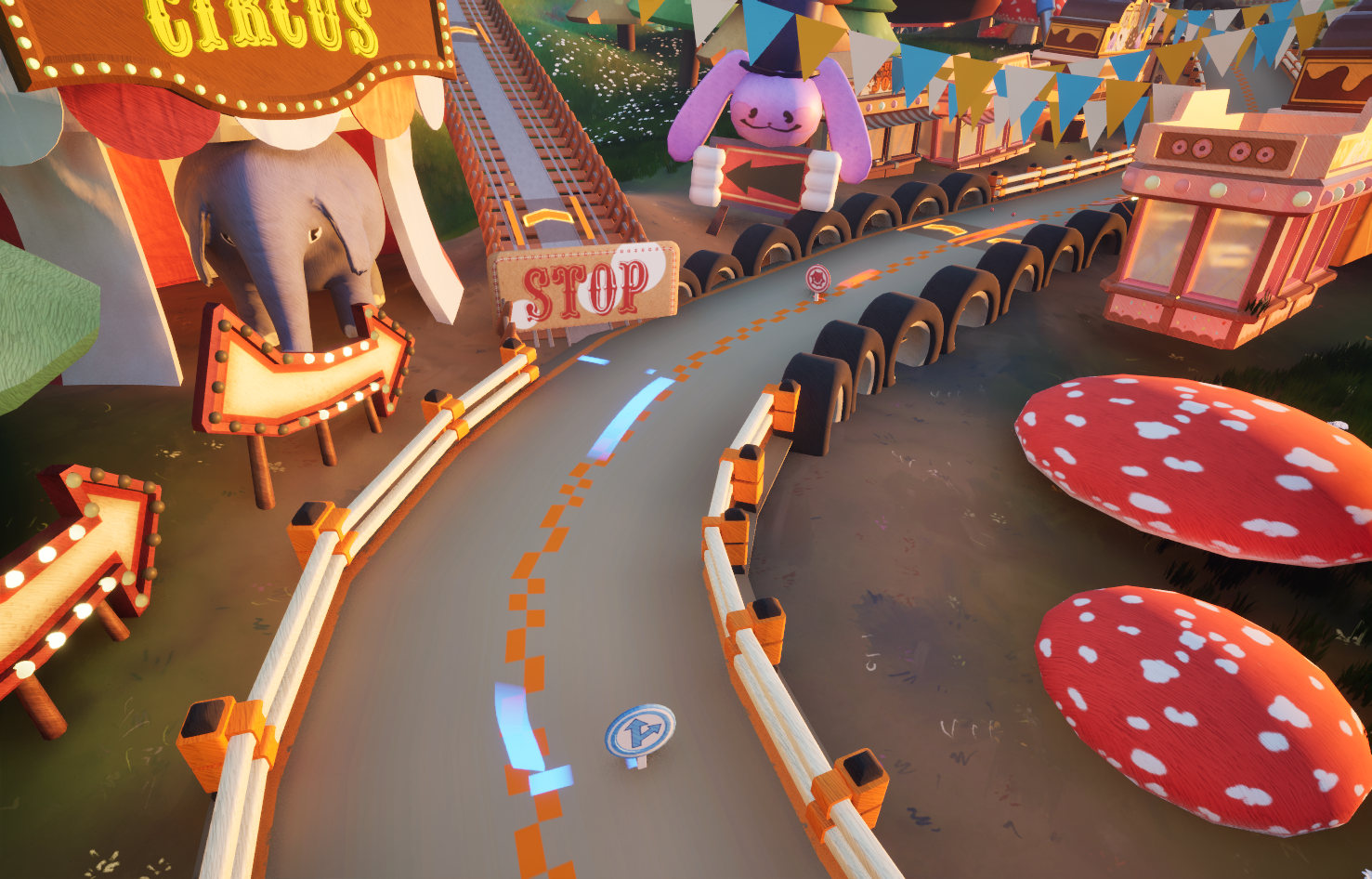
- However, the artists found the bulbs awkward and difficult to animate with the spline system.
- Instead, we opted for a simpler approach: our tech artist created a moving neon yellow line.
- After putting it in the game, I found that all the lines in neon yellow didn’t effectively convey the type of targets. So, I asked her to adjust the line colors to red and blue to better represent hazards and shortcuts, according to the target colors.
Gallery – White Box & Shipped Comparison

Track 1: Carnival Gate at Whitebox 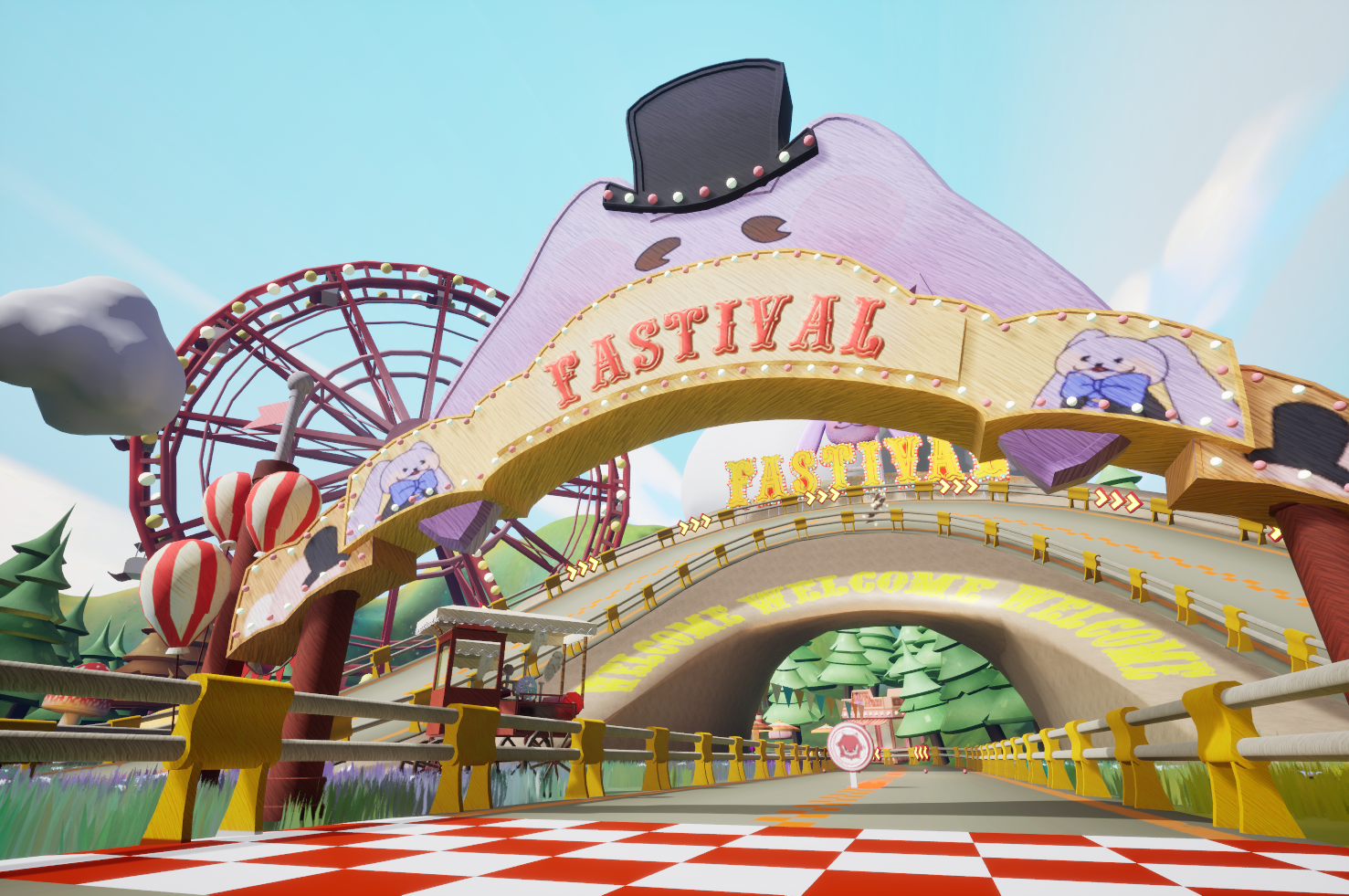
Track 1: Carnival Gate in Game 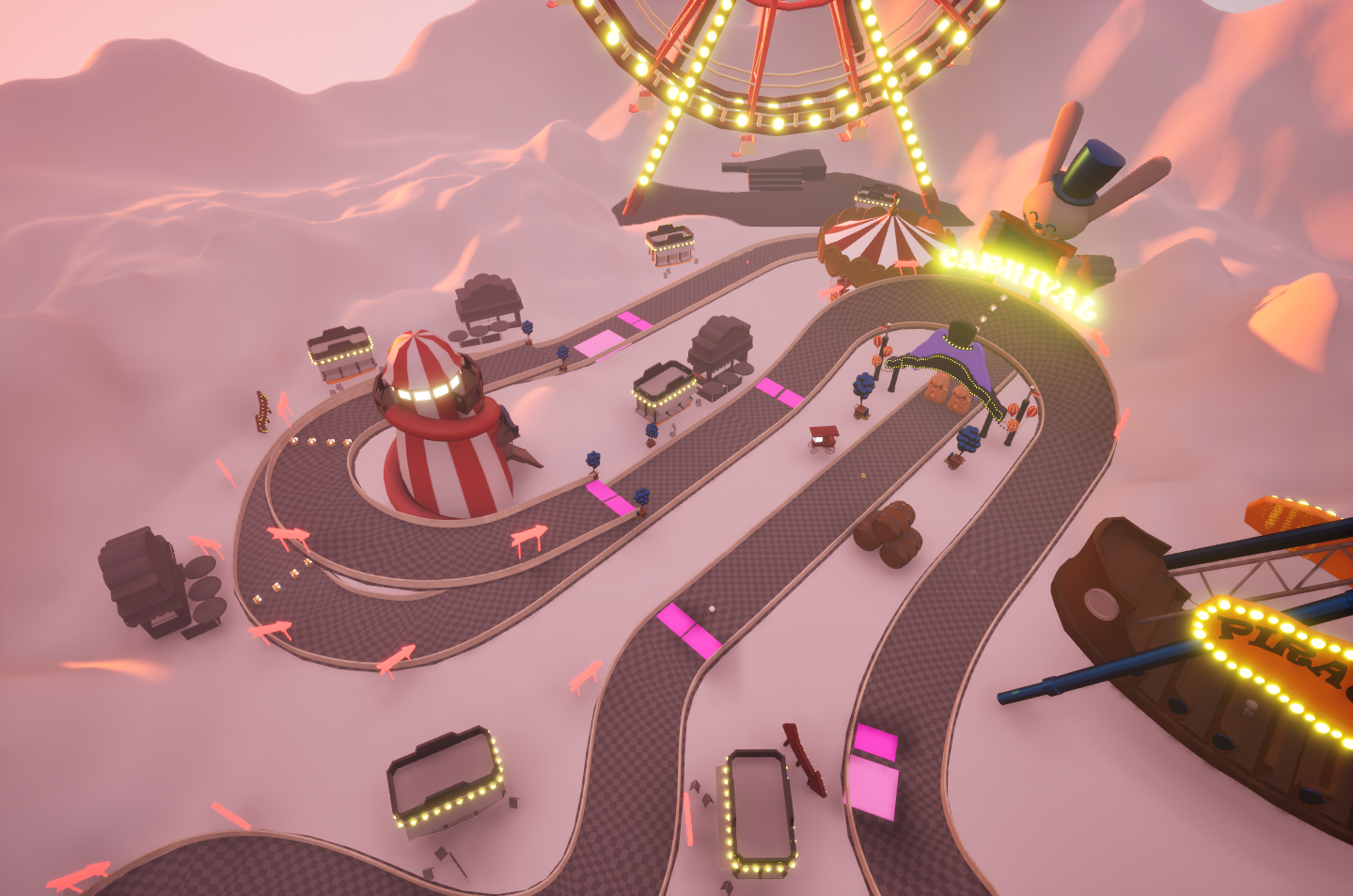
Track 1: Overview at Whitebox 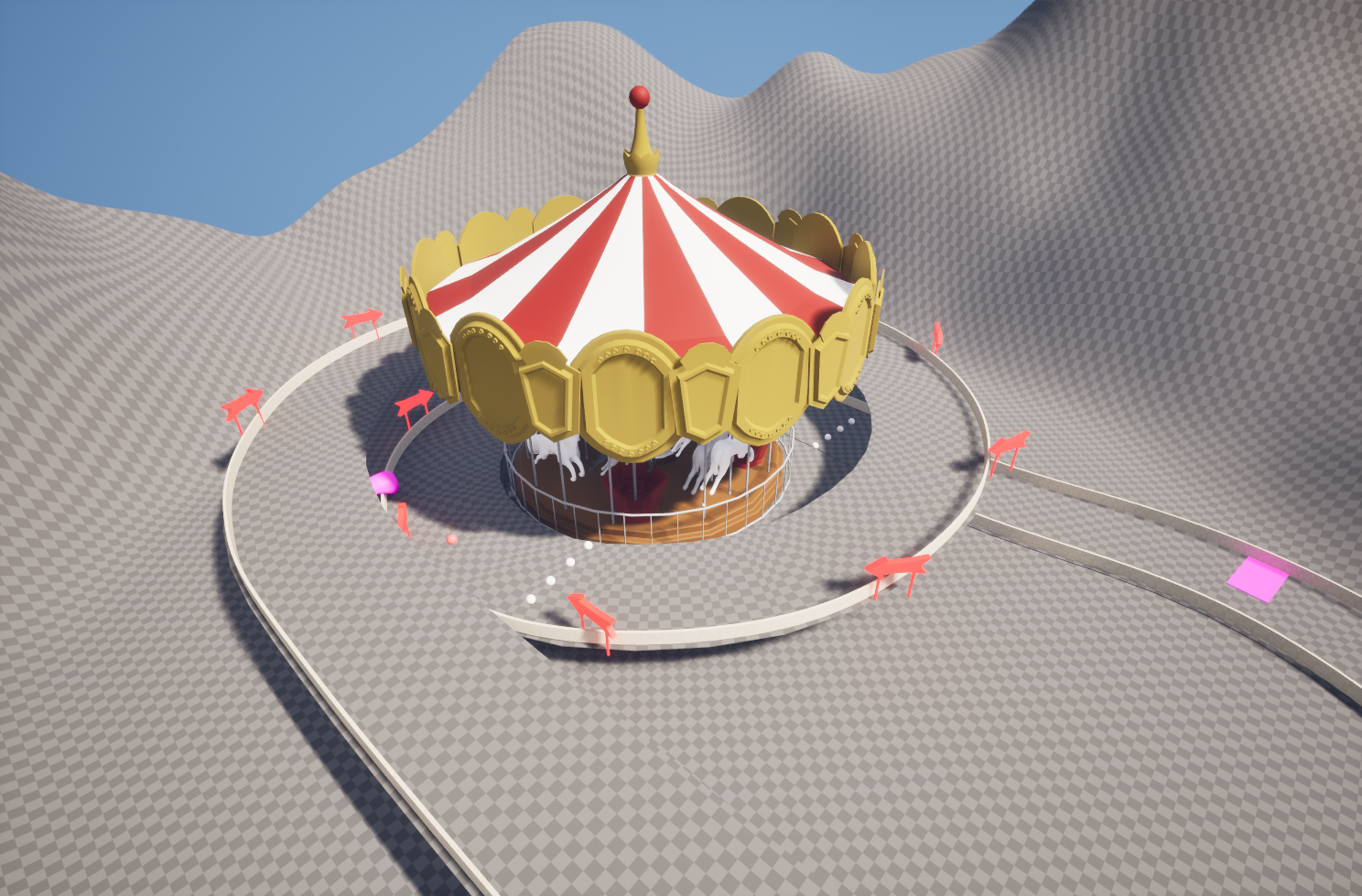
Track 1: Merry-Go-Round at Whitebox 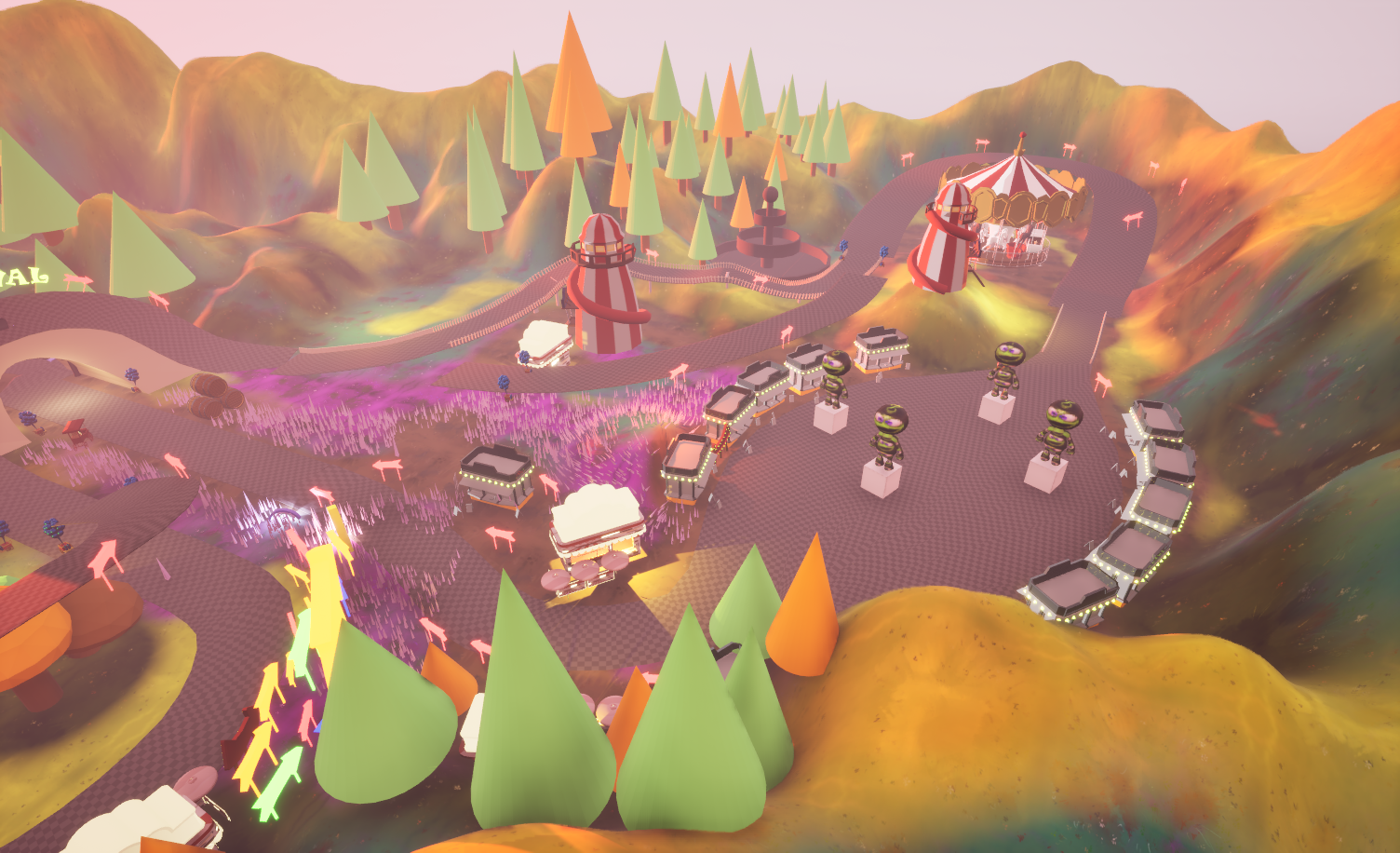
Track 1: Round Plaza at Whitebox 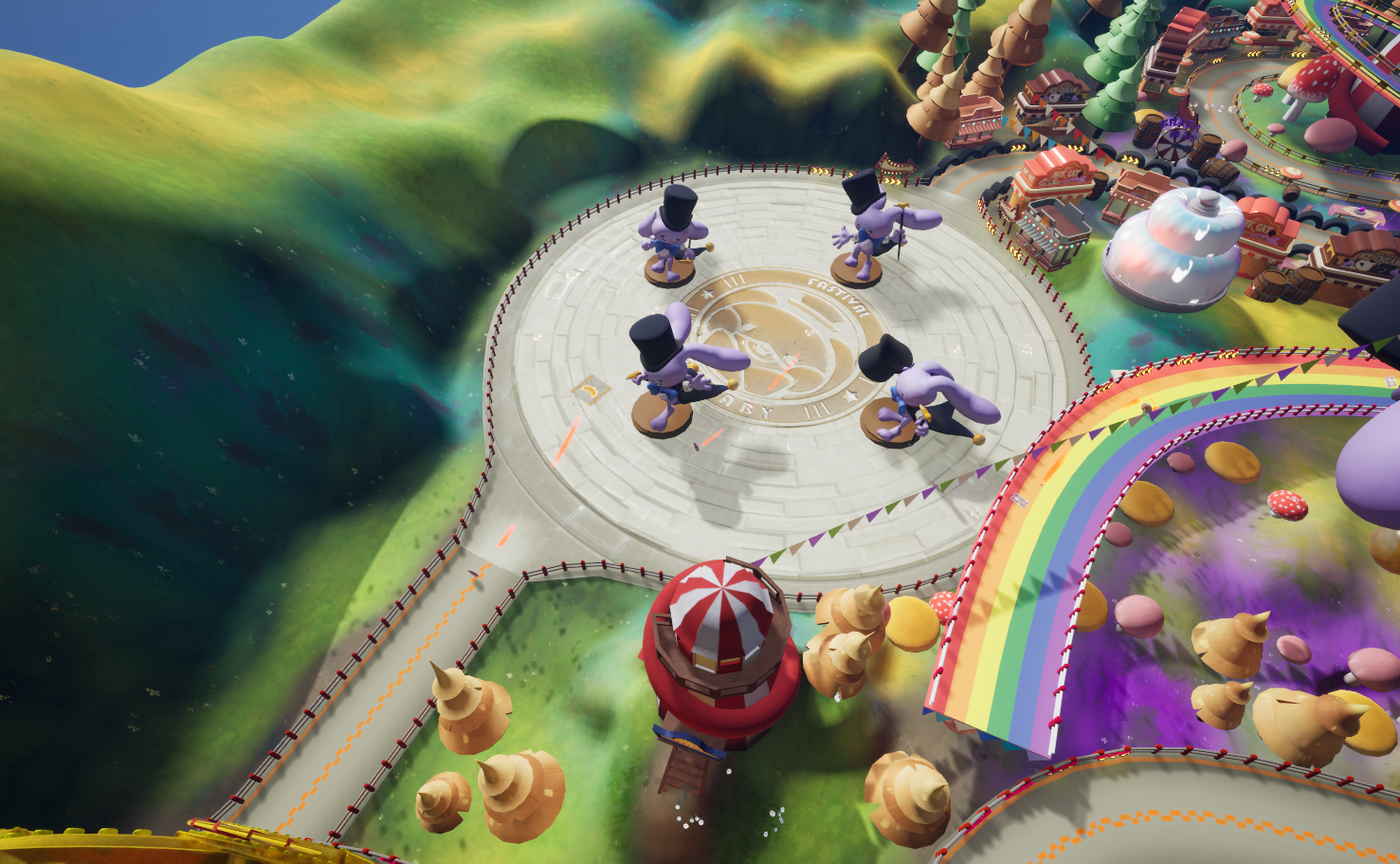
Track 1: Round Plaza in Game 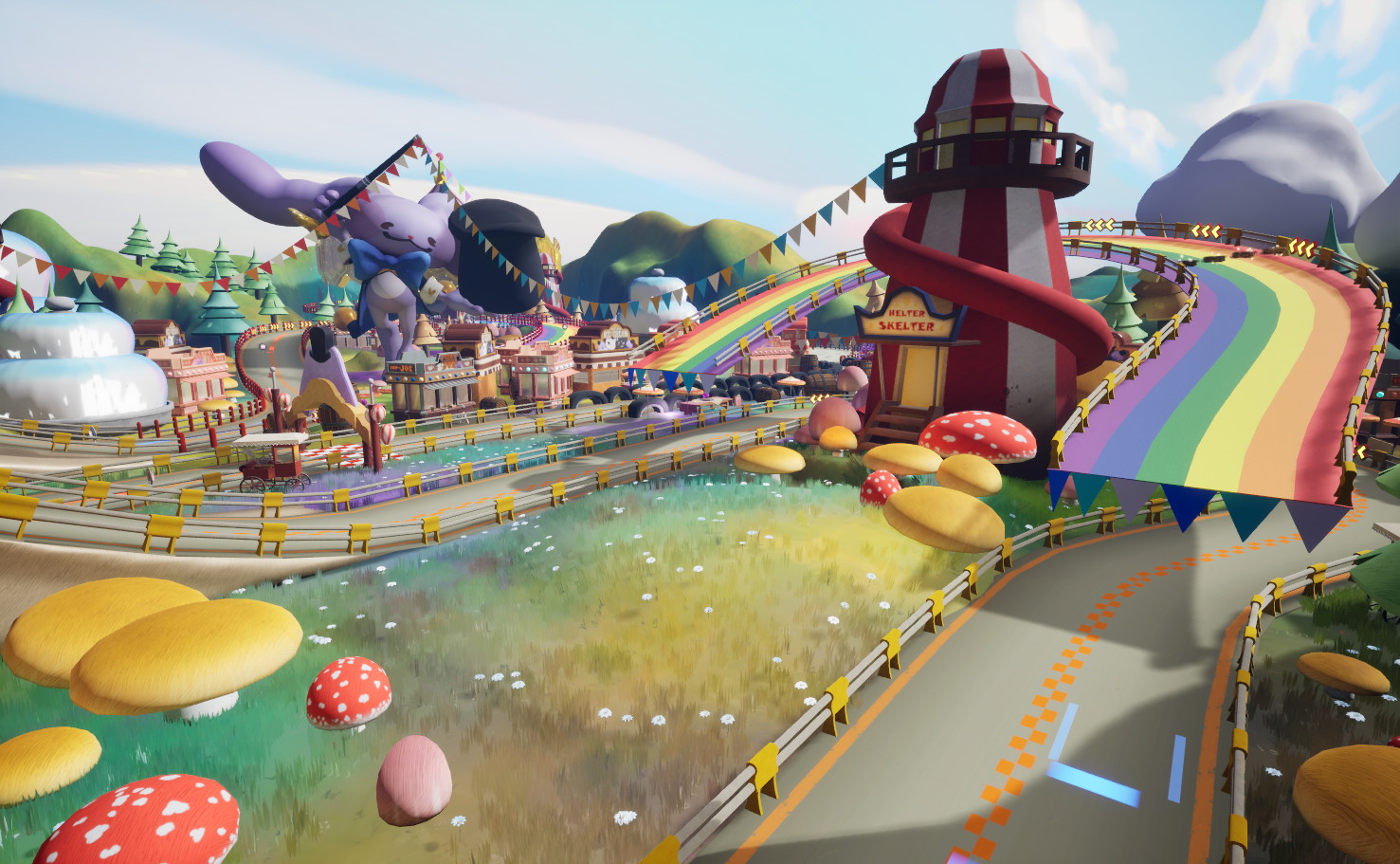
Track 1: Overview in Game 
Track 2: Whack-A-Mole at Whitebox 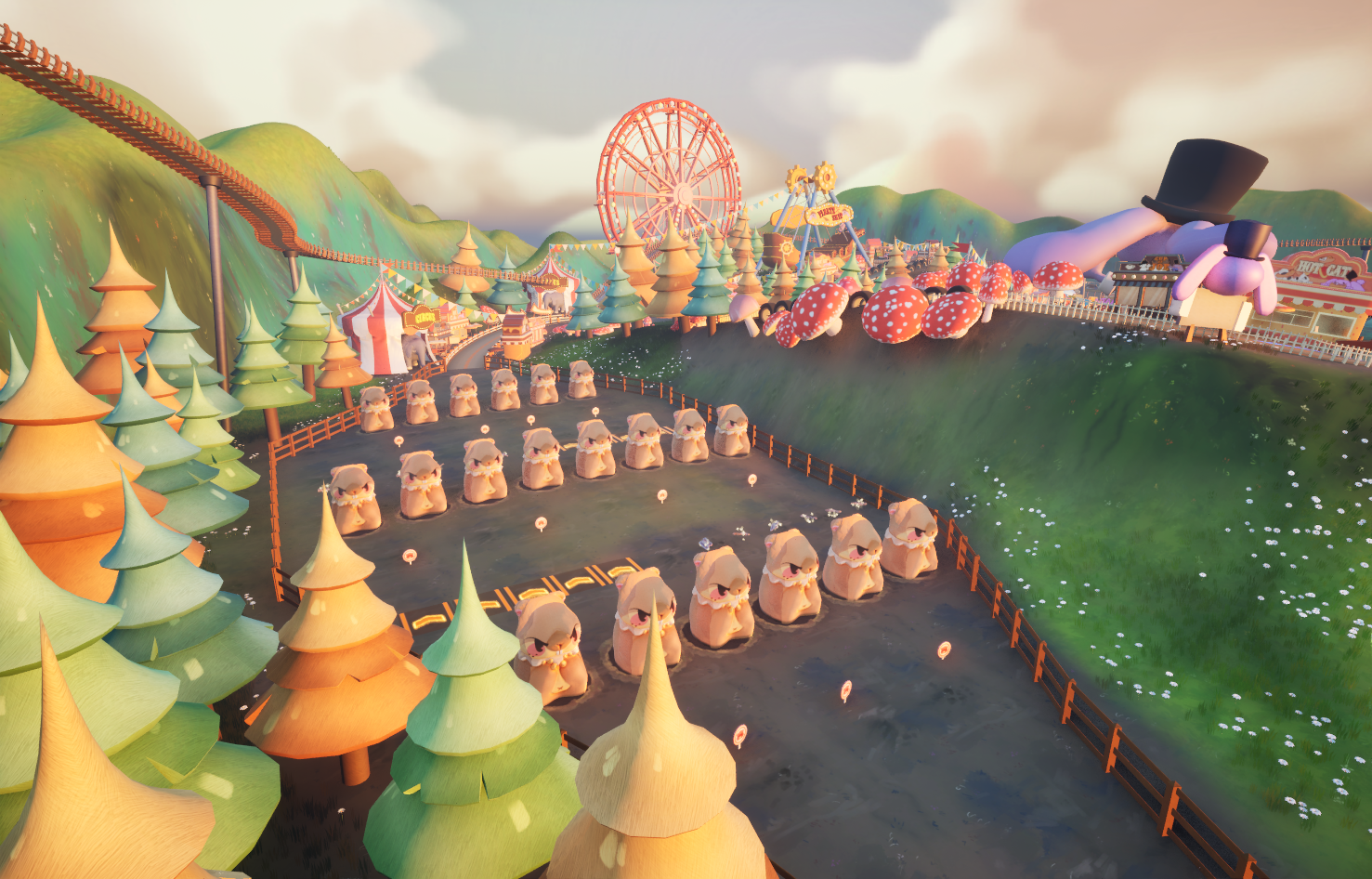
Track 2: Whack-A-Mole in Game 
Track 2: Overview in Game 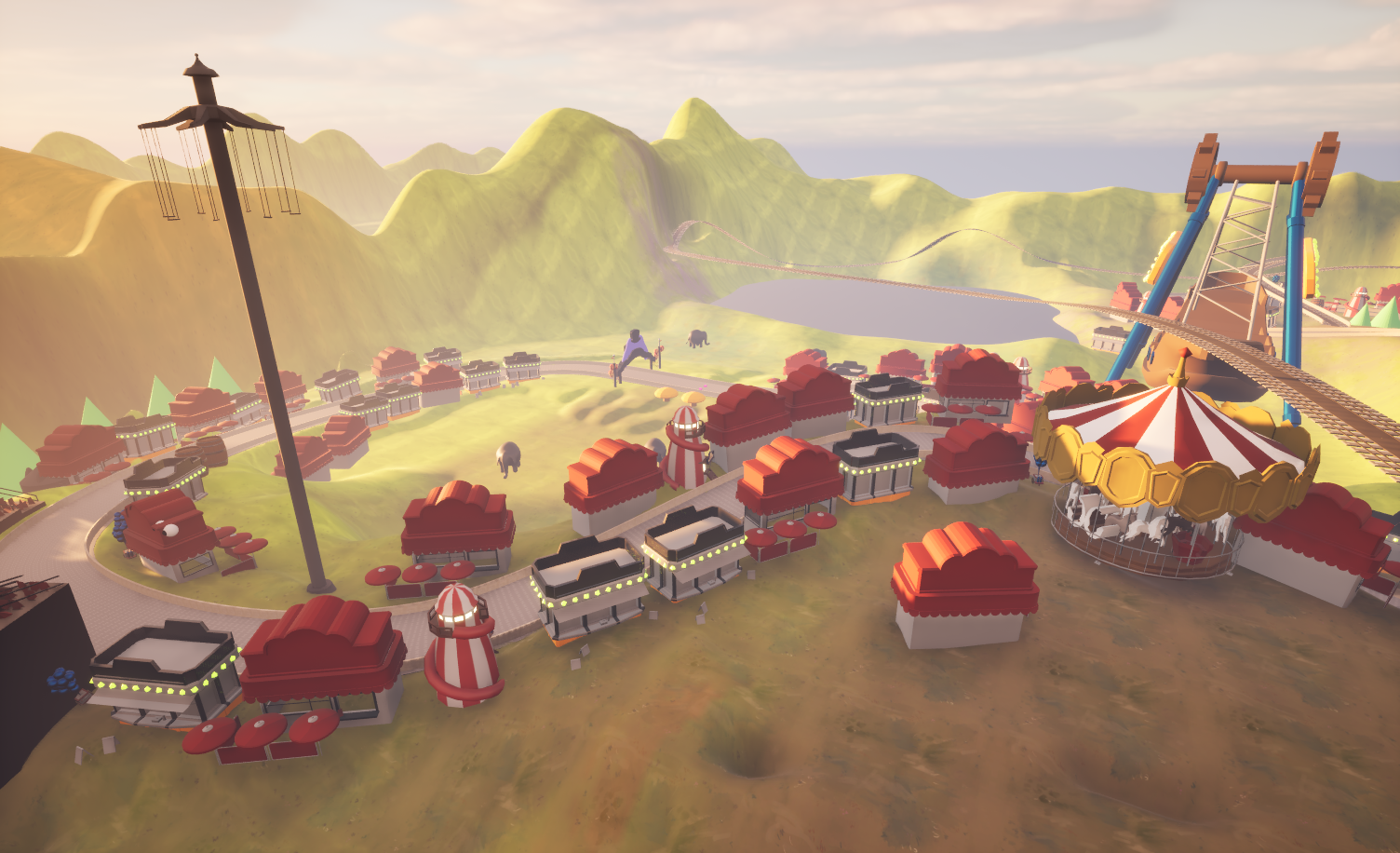
Track 2: Overview at Whitebox 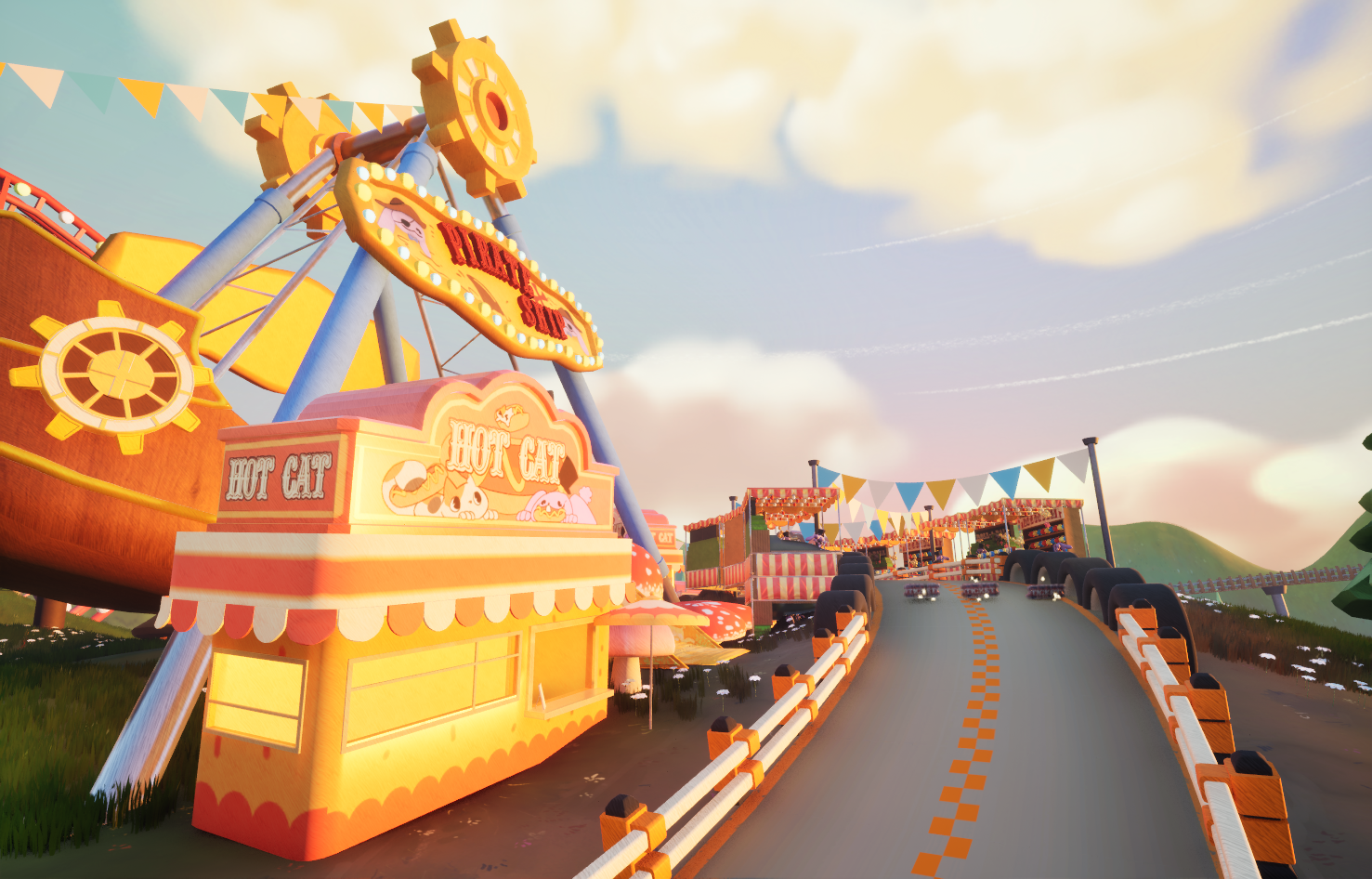
Track 2: Overview in Game 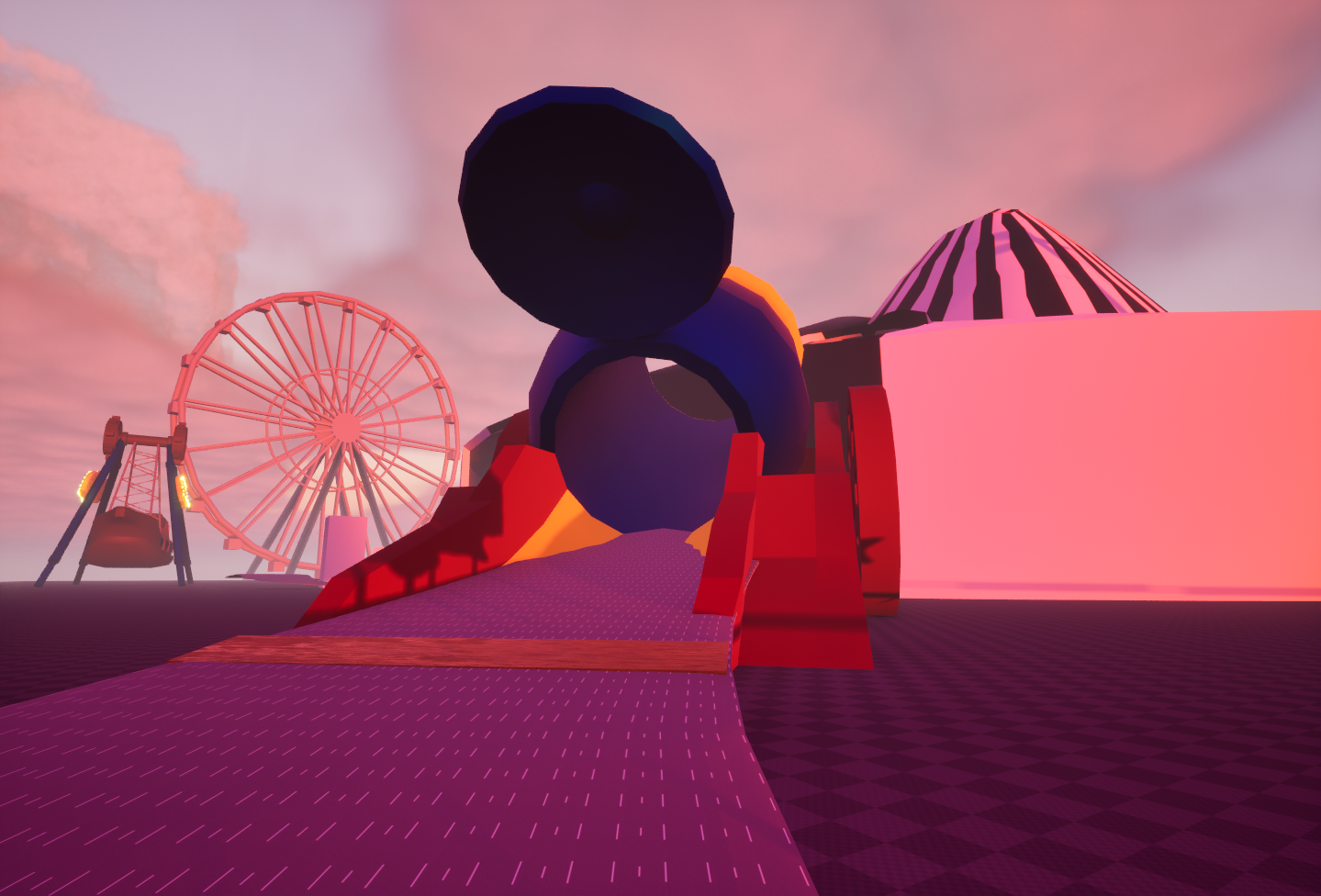
Track 3: Cannon at Whitebox 
Track 3: Cannon in Game 
Track 3: Circus Tent at Whitebox 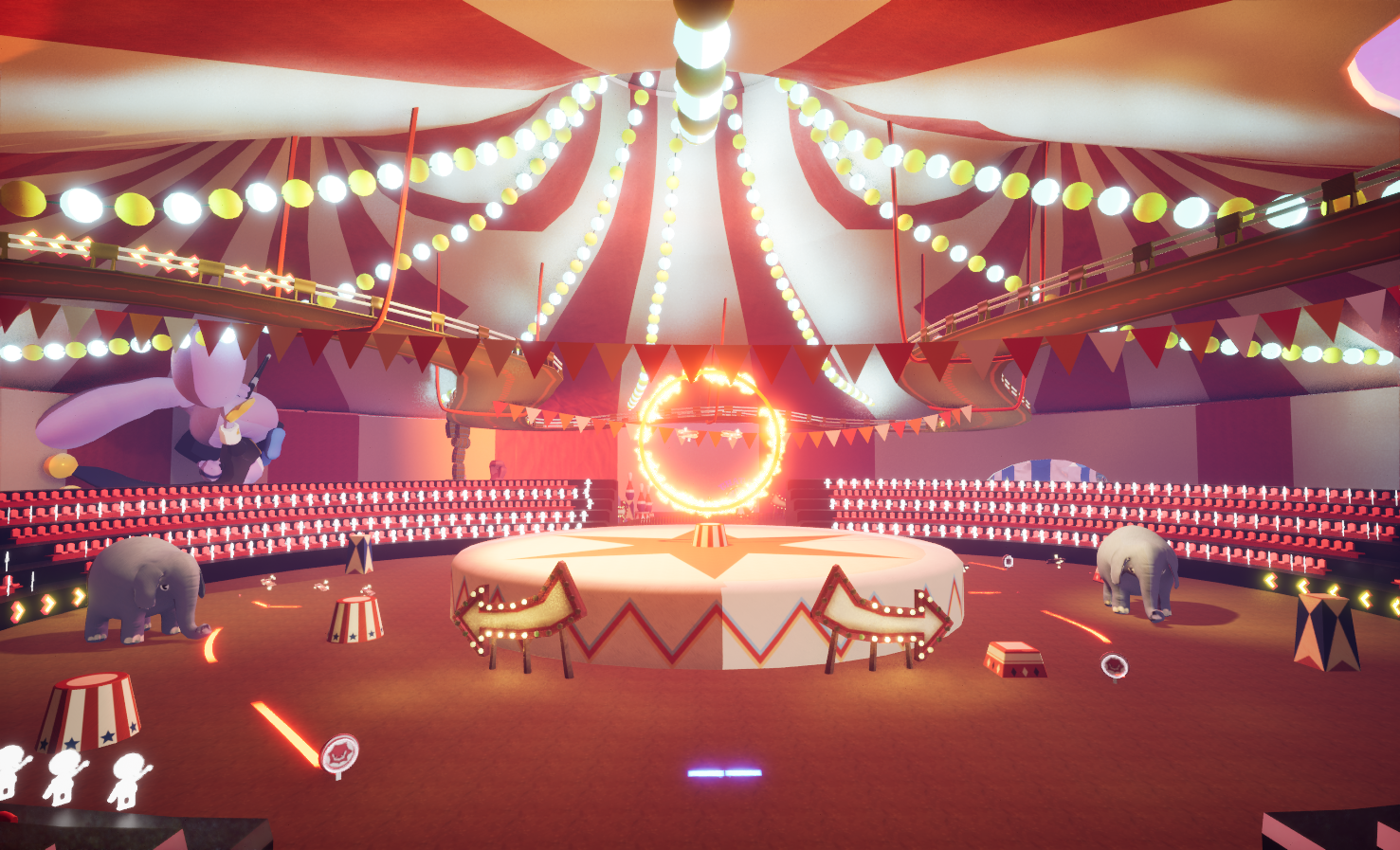
Track 3: Circus Tent in Game
Postmortem
What Went Well?
- Cross-Disciplinary Collaboration: Maintained strong communication between level designers, artists, and technical teams, ensuring alignment on design goals, asset creation, and implementation constraints. Regular check-ins and shared documentation helped streamline workflows.
- Adaptability and Creative Problem-Solving: Successfully iterated on designs based on feedback from multiple teams. When technical limitations arose, we consistently identified and implemented alternative solutions. This flexibility allowed us to efficiently integrate feedback, balance feasibility with design intent, and ensure a smooth development process without compromising the overall player experience.
What Went Wrong?
- Not all interactions went smoothly. Misunderstandings or differing perspectives between teams and leads occasionally led to misalignment. At times, it was my responsibility to identify the root of these disconnects, facilitate discussions, and bridge gaps to ensure all parties understood each other’s viewpoints. While some issues were resolved efficiently, others required more time and effort to align expectations and find common ground.
What I Learned?
- Be proactive with changes. In a large team, keeping everyone aligned can be challenging. As a lead, I needed to clearly communicate design changes from the game designer, ensuring the team understood them. I also had to collect valuable feedback and discuss potential refinements to continuously improve the game. Taking initiative in facilitating these discussions and addressing concerns early helped maintain efficiency and collaboration across disciplines.
- Be patient and considerate. It’s easy to make assumptions when making decisions, but failing to consider different perspectives can lead to misunderstandings or hurt feelings. Taking the time to understand others’ needs before deciding helps foster better teamwork and a more inclusive development process.
Play The Game
Visit our steam page to play!
 Yuning "Anona" Yang
Leave a comment